
Seal the attic floor, then insulate
Attic Insulation & Air Sealing in Flint, MI
Most heat leaves a Flint house through the top. We seal the gaps first, then bring the attic up to depth.
- Free on-site estimates
- Written quote listing foam type, thickness and R-value for each area
- Rim joists, attic bypasses and moisture checked before we price
Why the Attic Comes First
Attic insulation and air sealing are usually the best value in an older Flint home. Warm air rises and slips through every gap in the ceiling: around light fixtures, bath fans, plumbing stacks, chimneys, the attic hatch and the tops of interior walls. Once that warm air is in the attic it melts snow on the roof, which refreezes at the cold eaves as ice dams. Sealing those gaps and then adding insulation to the right depth cuts heat loss and helps stop the ice.
How deep is deep enough
Michigan's residential energy code table lists R-38 for ceilings in Climate Zone 5, which covers Genesee County. The Department of Energy goes further for existing Zone 5 homes: R-60 where the attic has little or nothing, or adding R-49 where 3 to 4 inches are already down. Many attics in 1940s and 1950s Flint houses hold a few inches of old rock wool or fiberglass that has settled and been disturbed by years of wiring and fan installs.
Sealing before insulating
Insulation slows heat moving through it but does not stop air. That is why we seal first: foam or caulk at top plates and wire holes, rigid board and foam around chases and chimneys (with proper clearance materials where needed), weatherstripping and an insulated cover on the hatch. Bath fans should vent outside, not into the attic.
Blown-in or spray foam
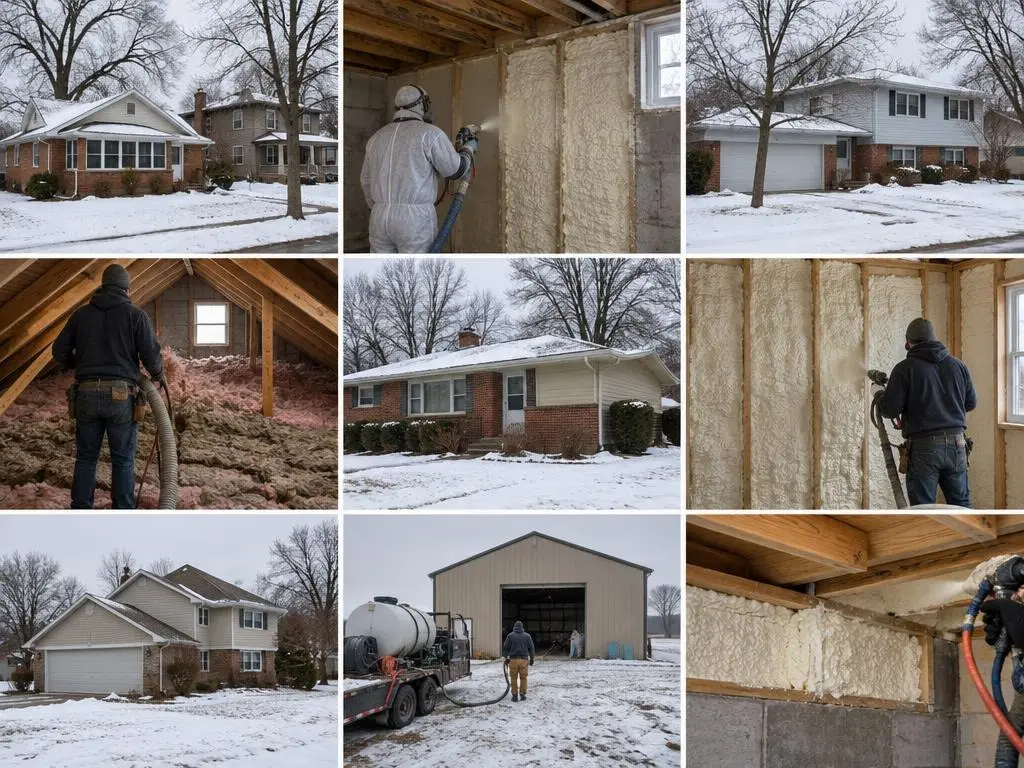
For most open attic floors, blown-in cellulose or fiberglass over a sealed ceiling is the cost-effective answer. Spray foam under the roof deck makes sense when there are ducts or a furnace in the attic, when the attic is being finished, or in tight spaces where loose fill cannot reach. In 1½-story houses, the kneewalls and short sloped ceilings often need foam because there is no room for anything thicker.
We will look in your attic, measure what is there and send a written quote. Get a free estimate
What Attic Work Includes
The pieces of a typical attic job around Flint.
Air sealing the attic floor
Top plates, wire and pipe holes, fixtures and chases sealed before insulation.
Hatch and pull-down stairs
Weatherstripped and insulated so the opening stops leaking.
Blown-in cellulose or fiberglass
Brought up to the planned depth and R-value, with depth markers.
Baffles at the eaves
Kept open so the roof can vent and insulation stays off the soffits.
Kneewalls and sloped ceilings
Foam or dense-pack in the tight spaces of 1½-story homes.
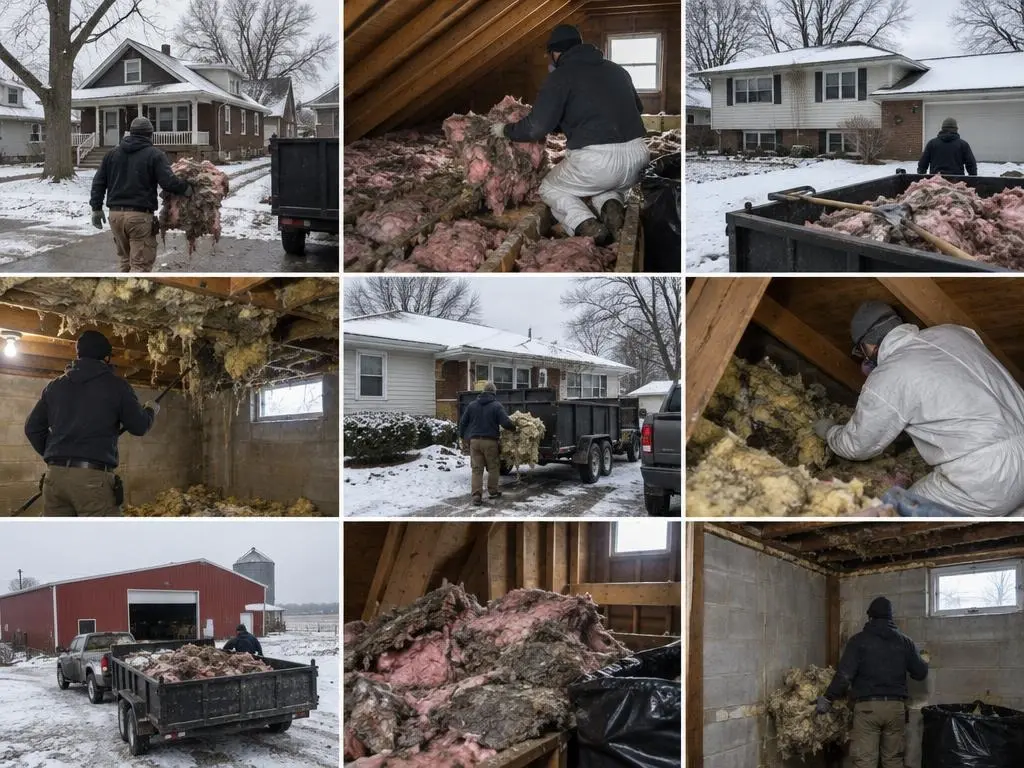
Old insulation removal
Wet, moldy or rodent-damaged material taken out before new goes in.
Published Attic Insulation & Air Sealing Costs
| Job | Range and source |
|---|---|
| Attic insulation, average job | $1,000 to $2,700, about $1,800 average (HomeGuide) |
| Air sealing | $350 to $3,000 (HomeGuide) |
| Blown-in, attic | $0.90 to $2.40 per sq ft (HomeGuide attic guide) |
| Spray foam on the attic floor | $1,100 to $6,800 (HomeGuide) |
| Spray foam on the roof deck | $1,500 to $9,000 (HomeGuide) |
| Spray foam, attic (existing home) | $2,500 to $12,000 (Fixr) |
| Old insulation removal | $1 to $2 per sq ft (HomeGuide) |
National ranges from HomeGuide's January 2026 attic guide and Fixr's 2025 spray foam guide. How much sealing is needed, the depth, access and any removal change the total. We price after seeing the attic, and that written estimate is the price.
How an Attic Job Runs
1. Inspection
We check depth, condition, bypasses, ventilation, bath fan venting and signs of roof leaks.
2. Written plan
Sealing, depth, material and price are written out.
3. Seal
Gaps, chases and the hatch are sealed first.
4. Insulate
Blown-in or foam goes in to the planned depth with baffles at the eaves.
5. Check
Depth is marked and you get photos of the finished attic.
Attic Insulation & Air Sealing Questions
What is the attic insulation code in Michigan?
The residential energy code table lists R-38 for ceilings in Climate Zone 5, which includes Genesee County. That is for new work; the Department of Energy recommends R-49 to R-60 for existing attics in the zone.
Will more insulation stop my ice dams?
It helps, but air sealing usually matters more. Ice dams come from warm air reaching the roof deck. Sealing the ceiling, insulating to depth and keeping the eaves vented together are what stop them.
Can new insulation go on top of the old?
Usually yes, if the old material is dry and clean and the ceiling has been sealed. Wet, moldy or rodent-soiled insulation should come out first.
Should my attic be vented or sealed?
Most Flint attics work best vented with a sealed, well-insulated floor. A sealed attic with foam under the roof deck makes sense when ducts or equipment are up there or the space is being finished.
Attic Insulation & Air Sealing Service Areas
- Spray Foam Insulation in Flint, MI
- Spray Foam Insulation in Burton, MI
- Spray Foam Insulation in Grand Blanc, MI
- Spray Foam Insulation in Flint Township, MI
- Spray Foam Insulation in Fenton, MI
- Spray Foam Insulation in Flushing, MI
- Spray Foam Insulation in Davison, MI
- Spray Foam Insulation in Swartz Creek, MI
- Spray Foam Insulation in Mount Morris, MI
- Spray Foam Insulation in Clio, MI
- Spray Foam Insulation in Montrose, MI
- Spray Foam Insulation in Linden, MI
- Spray Foam Insulation in Lapeer, MI
Get an Attic Insulation & Air Sealing Estimate
We will check your attic depth and air leaks and send a written price.